

Wool quality
Fibre strength is grown long before the shearers arrive.
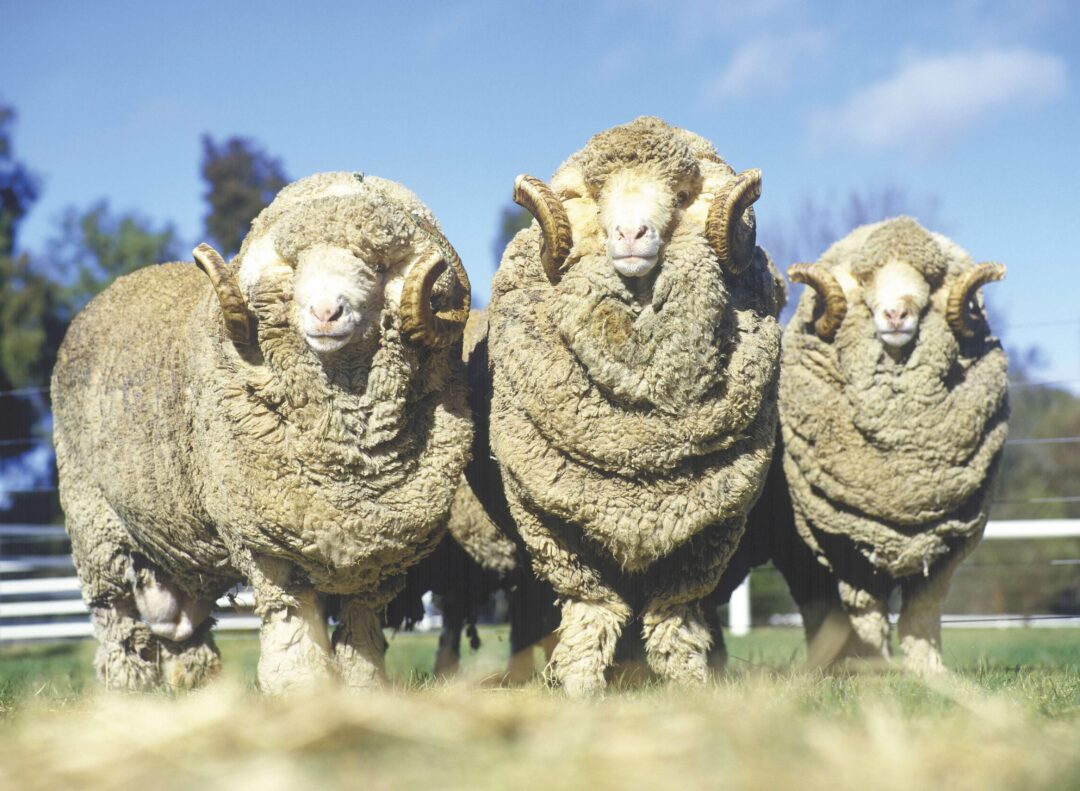
Ask a classer where a mob struggled through the season and they’ll find it in the staple. Every tender spot or break marks a point where nutrition dropped away, often months before shearing. Wool is grown every day of the year, so the nutrition behind it has to be there every day too.
What’s going on
A wool fibre is almost all keratin, a protein held together by sulphur cross-links. Those links come from the sulphur amino acids, mainly methionine and cysteine. They give wool its strength, elasticity and crimp.
Staple strength depends on the fibre staying an even diameter along its length. Anything that jolts fibre growth leaves a thin, weak point where the staple breaks under tension. That includes a sudden drop (late pregnancy, a feed gap, a cold snap) and a sudden spike (hungry sheep turned onto lush feed).
Trace elements matter too. Copper is needed to form the cross-links properly, and a shortfall gives limp, steely wool with little crimp. Zinc supports healthy follicles and normal wool growth.
What to watch for
- Low staple strength or a mid-staple break on your test results
- A tender point that lines up with late pregnancy or lactation
- Steely, low-crimp wool, which can point to copper deficiency
- Big swings in feed through the year, in either direction
- A wide spread in fibre diameter along the staple
Nutrition at this stage
Wool is being grown every day, so this stage is every stage.
- Sulphur amino acids (methionine and cysteine): the raw material of keratin, and particularly important for wool growth.
- Energy and protein: set the overall rate of fibre growth.
- Copper: needed to form the cross-links that give wool its crimp and strength.
- Zinc: supports healthy follicles and normal wool growth.
- Sulphur: part of the cross-links in every fibre.
Green feed can work against staple strength. When hungry sheep move from dry feed onto a lush break, fibre diameter jumps sharply, and that change along the staple is a weak point. Lush, improved pastures can also be high in molybdenum and sulphur, which tie up copper. That’s why sheep can look in great condition and still grow steely, tender wool.
Where LivestockIQ fits
A dose at joining supports that moment. It doesn’t help the fibre being grown eight weeks later. That’s why both of our wool products are dosed every 6 weeks, all year.
If you can’t run a full year-round program, late pregnancy and lactation are the windows where tender points most often form, so they’re worth covering first.
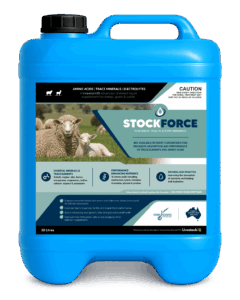
The sheep specialist. It’s selenium-free so it sits alongside your selenium program, and it helps support wool cut and fibre strength, fertility and lamb survival across the whole year.
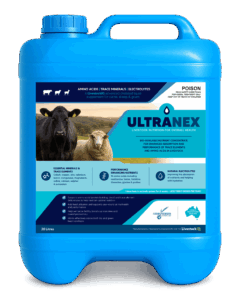
Aids wool cut and fibre strength too, and also covers cattle and goats. A good fit for mixed operations, or flocks not on a selenium program.
Both supply 16 amino acids preformed (including methionine), chelated trace elements including copper and zinc, and natural electrolytes from fulvic acid. They’re rumen-protected and released steadily over about six weeks, so there are no spikes and troughs. That’s nine three-day trough applications a year, with no yarding.
At weaning or before trucking, swap one regular dose for StressGuard, then pick the six-weekly routine back up 6 weeks later.
StressGuard contains selenium. If your flock is normally on StockForce because of a selenium program, follow the StressGuard dose rates and instructions exactly, and don’t dose dehydrated animals.
For the full science and a year-round dosing calendar, read our article Wool is grown every day of the year.
FAQ
If I only dose before shearing, will it help this clip?
Not much. The wool coming off now was grown over the past year. Steady nutrition protects the fibre being grown from today on.
Can year-round dosing help with a mid-staple break?
It helps support even fibre growth by keeping nutrients steady. Feed changes, pregnancy and weather still play a part, so manage condition alongside it.
Ready to set up your flock's program?
Your local reseller can help you choose the right product and timing.
Questions? Call (08) 8725 4668 or email [email protected]