

Dry times and drought feeding
Goats handle dry times better than most stock. But dry feed and a new ration still leave gaps.
Goats are built for tough country. They browse widely, recycle nitrogen and use water efficiently, which is why they often hold condition when sheep start to slip.[1][2] When the season runs on, though, dry feed, poor water and hand-feeding all bring their own risks.
What’s going on
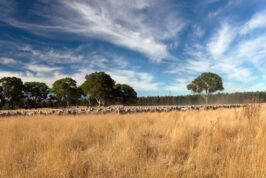
As paddocks dry off, goats shift their diet toward browse and less palatable plants, which keeps them going longer than most livestock.[2] Dry standing feed is still low in protein, energy and some trace elements, and stock with no green feed can run short of vitamins over a long dry spell.[1]
Water use rises sharply. On dry feed, an adult dry goat drinks around 5 to 7 litres a day and a doe with kids 5 to 10 litres, and that can double when temperatures go over 40°C. Salty water lowers intake, and goats grazing saltbush, bluebush or copper burr tolerate around 30% less salt in their water.[1]
Hand-feeding grain brings its own problems. Fast changes can cause acidosis and digestive upsets, enterotoxaemia (pulpy kidney) risk rises, and dusty feed in confinement can lead to respiratory problems.[1][3] Urea needs particular care, because it’s toxic if introduced too quickly.[1]
What to watch for
- Condition dropping in does, especially pregnant or lactating does
- Water quality and supply: salty, stale or low dams, and troughs that can’t keep up in heat
- Shy feeders missing out at feed troughs or trails
- Scouring, bloat or sudden deaths after a ration change
- Vaccination: boosters before high-risk periods such as grain feeding in drought[3]
Nutrition at this stage
The aim in a long dry is to keep the rumen working and fill the gaps dry feed leaves.
- Energy and protein: usually the first nutrients to run short on dry feed.
- Roughage: goats still need fibre in the diet when hand-fed, and ration changes should be gradual.[2]
- Electrolytes: support hydration through heat and poor water.
- Trace elements: copper, zinc, selenium and cobalt can fall short on dry feed, depending on your soils.
- Amino acids: support appetite, condition and feed conversion on a ration.
Where LivestockIQ fits
Dry times are when water dosing works best. With no green feed, every goat comes to the trough, so every goat gets its dose.
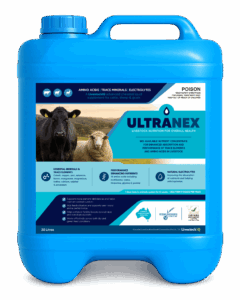
Every 6 weeks through the dry. It helps support condition, appetite and feed conversion on dry feed or a ration.
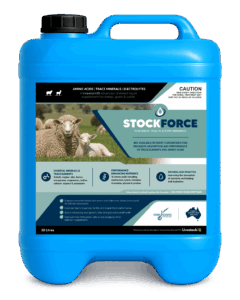
The selenium-free option for herds on a selenium program.
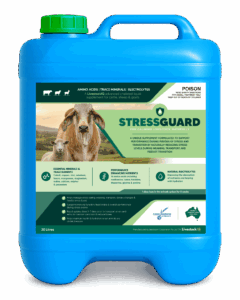
When you move goats onto a drought ration, into confinement or onto agistment. It replaces the regular dose for that event.
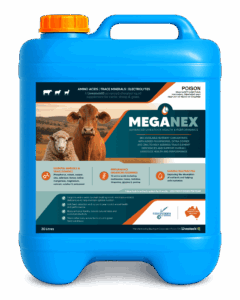
For herds on phosphorus-deficient country or under high demand through the dry. It contains phosphorus, plus higher copper and zinc. It has the highest copper in the range, so check what your goats already get from licks, drenches or boluses before using it.
Doses are per head, so if you’re feeding a larger mob in a drought lot, use the DoseIQ Calculator to work out the total for the water point.
FAQ
My goats look fine. Do they need anything in a dry spell?
Goats often look better than other stock in a dry, but condition can hide gaps in trace elements and protein. Does carrying or rearing kids are the most exposed.
Does trough dosing still work if goats are browsing far from water?
Yes. In dry times, goats rely on troughs and dams for all their water, so they come in to drink regularly. Dose the water points they’re actually using.
Ready to set up your herd's program?
Plan your dry-season program with the DoseIQ Calculator, or find your nearest stockist.
Questions? Call (08) 8725 4668 or email [email protected]