

Calf rearing
The first few hours shape the cow she becomes.
A calf is born with almost no immunity of her own. Everything she needs to fight off disease in her first weeks comes from colostrum, and how well she absorbs it drops by 30 to 50% within six hours of birth.[1]
What’s going on
Colostrum absorption is best in the first four hours and stops at around 24 to 36 hours.[1] Dairy Australia’s guide is 2 to 4 litres of colostrum in the first 24 hours, ideally sooner.[2] Quality matters as much as quantity: a Brix reading of 22% or higher is the cut-off for good colostrum.[1]
When it doesn’t work, it shows. In one south-west Victorian study, 38% of heifer calves had failed to absorb enough antibodies, and around 31% of deaths in the first three weeks may be linked to it.[1] Calves are at very high risk of scours and infections in their first two weeks,[1] and scours is the most important cause of death in calves under a month old.[3]
From there, the job is building a rumen. Offering grain or concentrate from day one, and fibre from three weeks of age, drives rumen development.[2] Water matters from birth too: calves without water ate 31% less dry feed and gained 38% less weight over four weeks.[1]
Most Australian calves are weaned at 8 to 12 weeks.[1] Weaning on concentrate intake, such as an average of 1 kg per calf a day, along with weight and height, means the rumen is ready to take over.[2]

What to watch for
- Calves that are slow to suck or didn’t get colostrum quickly[1]
- Scours, especially in the first two weeks
- Calves not eating starter or drinking water by weaning
- Uneven growth across a group of calves
- Calves losing condition after weaning, when their diet changes
Nutrition at this stage
- Colostrum: the single most important feed of the calf’s life.
- Milk or milk replacer: typically around 10% of bodyweight a day in Australia (4 to 5 litres).[1]
- Starter, fibre and water: together they build the rumen for weaning. Calf starter should be at least 22% crude protein for calves on restricted milk.[1]
- Trace elements: selenium and copper deficiency is common across much of Australia, and cobalt deficiency can occur in young stock, especially in southern Australia.[4]
- Electrolytes: the first option for calves with scours.[2]
Where LivestockIQ fits
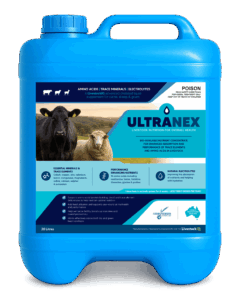
ULTRANEX for calves on milk
2.5 mL a head for calves under 60 kg, and 3 mL for calves 61 to 99 kg, every 2 weeks, given through the milk while calves are on a full milk diet, then through the water once water makes up more than half of what they drink. It helps support steady growth and immune function while the rumen develops.
ULTRANEX for weaned calves
Dosed by weight, from 20 mL a head at 100 to 200 kg, every 6 weeks through the trough.
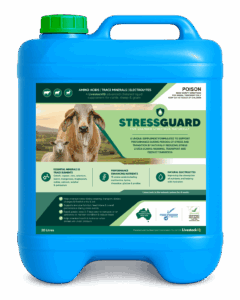
Helps support calves through weaning and transport, in place of the regular dose. It contains selenium, so follow the dose rates and instructions exactly.
FAQ
Can LivestockIQ replace colostrum or electrolytes for scouring calves?
No. Colostrum is irreplaceable, and a scouring calf needs electrolytes and, if she’s sick, your vet. LivestockIQ supports steady growth alongside good calf rearing.
What about bobby calves?
Bobby calves must be at least 5 days old to go to a saleyard, calf sale or processor, and fed within 6 hours before transport.[5] All LivestockIQ products have a nil withholding period, so dosing doesn’t hold up sale.
Ready to set up your herd's program?
Work out calf doses with the DoseIQ Calculator, or find your nearest stockist.
Questions? Call (08) 8725 4668 or email [email protected]