What does your horse do?
Every horse needs the same building blocks. Which ones matter most changes with the work it does and the stage of life it’s at.
01
Broodmares and young horses
Condition through pregnancy and lactation, and steady growth in young stock.
Key ingredients
Lysine, arginine, copper, zinc
02
Working horses
Stock horses, campdraft and farm horses doing the hard yards.
Key ingredients
Electrolytes, magnesium, leucine
03
Sport and pleasure horses
Coat, hoof and topline, at home and on the road.
Key ingredients
Methionine, zinc, copper, tyrosine
04
Paddock and older horses
Holding condition on pasture through winter and dry times.
Key ingredients
Full amino acid spread, selenium, zinc
Inside EquineElite
Three components, working together
EquineElite brings amino acids, chelated trace minerals and natural electrolytes together in concentrated ratios that mirror nature. The amino acids are naturally derived from kelp and seagrass extract, which carries over 90 natural nutrients. The trace minerals are a combination of added, chelated minerals and those that occur naturally in the sea plants, such as calcium.
16
Amino acids
9 essential and 7 non-essential, led by leucine, isoleucine, lysine and threonine. The building blocks of muscle, hoof and coat.
10
Chelated trace minerals
Copper, zinc, selenium, cobalt, manganese, magnesium and more, plus iodine and calcium, chelated so they reach the bloodstream rather than passing straight through.
Natural
Electrolytes
From fulvic acid, the carrier that helps maintain hydration and carries the whole formulation into the cells.
One dose
20 mL
for mature horses, 10 mL for younger and light horses, straight into the water. For the best overall results, every two weeks through the year, or at key times.
How horses absorb nutrients
Where it’s absorbed matters
A horse can eat plenty of protein and still come up short on the amino acids it needs. Amino acids are absorbed in the small intestine. Protein that reaches the hindgut is mostly lost.
Step 1
Stomach
Small, around 15 litres, and works best little and often.
Step 2: the absorption zone
Small intestine
15 to 21 metres long. Protein is broken down and absorbed here as amino acids, along with most minerals.
EquineElite’s amino acids and chelated minerals are designed to be taken up here.
Step 3
Hindgut (caecum and colon)
Microbes ferment fibre for energy. Protein that gets this far is absorbed mainly as ammonia and passed out, so it does little to supply amino acids.
Sources: Merck Veterinary Manual (2026); K. Davison, The Horse (2025). Lysine is the first-limiting amino acid for horses (M. Boast, The Horse, 2023).
16 amino acids
What each amino acid does for your horse
Essential amino acids can’t be made by the horse, so they have to come from the diet. When one runs short, the horse can’t build protein properly, however much of the others it has.
EssentialNon-essential
Muscle and recovery
Build and repair muscle after work. Leucine switches on muscle protein building.
LeucineIsoleucineValineLysineThreonineHistidine
Hoof, coat and skin
More than 90% of the hoof wall is protein. Sulphur amino acids build keratin, and tyrosine colours the coat.
MethioninePhenylalanineTyrosineGlycineProline
Tendons and connective tissue
Glycine and proline are the main building blocks of collagen in tendons, ligaments and skin.
GlycineProlineLysine
Gut and immune
Fuel for the cells lining the gut, and the raw material for immune proteins.
ThreonineGlutamic acidArginine
Energy at work
Help working muscle manage glucose, produce energy and buffer acid build-up.
AlanineAspartic acidHistidineSerine
Growth and breeding
Lysine is the amino acid most likely to run short in growing horses.
LysineArginineThreonineMethionine
Amino acid list from the EquineElite fact sheet. Roles: Merck Veterinary Manual (2026); The Horse (E. Larson 2026, K. Davison 2025, M. Boast 2023). A complete spread of amino acids does more for muscle recovery than branched-chain amino acids alone (K. Davison, 2025).
10 chelated trace minerals, plus iodine and calcium
Small amounts, big jobs
Trace minerals are needed in tiny amounts, but they do a huge amount of work, from hooves and coat to muscle and immune function. Levels in pasture and hay depend on the soil. The trace elements in EquineElite are chelated, bound to amino acids, so they reach the bloodstream rather than passing straight through.
Chelated
Copper
Connective tissue, coat pigment and antioxidant defences
Chelated
Zinc
Part of more than 100 enzymes: skin, hoof, coat, growth and immunity
Chelated
Selenium
Antioxidant defences and healthy muscle
Chelated
Cobalt
Used by hindgut microbes to make vitamin B12
Chelated
Manganese
Carbohydrate and fat metabolism
Chelated
Magnesium
Muscle and nerve function, and lost in sweat
Chelated
Sulphur
Part of the sulphur amino acids that build keratin in hooves and hair
Chelated
Boron
How the body uses calcium, magnesium and phosphorus
Chelated
Sodium
The main electrolyte lost in sweat
Chelated
Potassium
Muscle and nerve function, and lost in sweat
Also contains
Iodine
Thyroid function and metabolism
Also contains
Calcium
Bone strength and muscle contraction
Works alongside the rest of the diet
EquineElite isn’t designed to replace your horse’s feed or a complete mineral supplement. It’s a targeted source of amino acids, chelated trace minerals and natural electrolytes that works alongside them.
Its fulvic acid component acts as a natural carrier, designed to help the horse absorb and make better use of the nutrition it’s already getting from pasture, hard feed and other supplements.
Full target analysis is on the EquineElite label and fact sheet. Roles: Merck Veterinary Manual (2026). EquineElite contains copper and selenium, so avoid over-supplementing selenium with other products at the same time.
Natural electrolytes and hydration
Horses sweat more than almost any other animal
And their sweat is saltier than their blood. With every litre goes sodium, chloride, potassium and magnesium.
Lost in every litre of sweat
5.3 g
Chloride
3.1 g
Sodium
1.6 g
Potassium
Hard work can strip more than 30 g of salt in one to two hours.
Sweat per hour, 500 kg horse
Light work2.5 to 5 L
Medium work5 to 10 L
Heavy work10 to 25 L
EquineElite contains sodium, potassium and magnesium, carried by natural fulvic acid electrolytes, to help maintain hydration and fluid balance after work and travel.
Source: Merck Veterinary Manual (2026); EquineElite label. Sweat rates per 100 kg per hour: light 0.5 to 1 L, medium 1 to 2 L, heavy 2 to 5 L.
EquineElite through a horse’s life
How the ingredients line up with your horse
Broodmares and young horses
A lactating mare costs around 70% more to feed than a dry mare, and her protein needs roughly double in the first three months. A weanling heading for 500 kg can gain close to a kilo a day.
Ingredients that matter most
Lysine, threonine and arginine for growth and milk; glycine and proline for connective tissue; copper and zinc for developing bones and joints.
How EquineElite helps: Helps support growth in young stock and condition through reproduction and lactation in broodmares, with no extra handling of heavily pregnant mares or mares with young foals. Foals still with their mother don’t need their own dose. Once weaned, young horses go on 10 mL until they reach mature weight, then 20 mL.
Working horses
A stock horse in steady work can sweat 5 to 10 litres an hour. A horse in light work needs about 35% more feed than one at rest, and in heavy work nearly twice as much.
Ingredients that matter most
Natural electrolytes and magnesium for hydration; leucine, isoleucine and valine for muscle protein; histidine and alanine for working muscle.
How EquineElite helps: Helps support hydration, recovery and condition through a busy season, and helps replenish nutrients lost during exercise. Horses in strenuous work benefit from a dose directly after hard exercise, to help support recovery and rehydration. Horses in lighter work do well on the year-round fortnightly program.
Sport and pleasure horses
Coat, topline and hooves are where good nutrition shows. More than 90% of the hoof wall is protein. Travel and events add time on the road, unfamiliar water and stress.
Ingredients that matter most
Methionine for hoof and hair keratin; tyrosine, phenylalanine and copper for coat colour; zinc for skin and hoof; electrolytes around travel.
How EquineElite helps: Helps support coat, hoof condition, hydration and recovery through the riding and competition season.
Paddock and older horses
Pasture changes through the year. Trace mineral levels depend on the soil, and tropical grasses such as kikuyu and setaria lock up calcium. Older horses often lose condition because of teeth, metabolic problems or diet.
Ingredients that matter most
The full amino acid spread for muscle and topline; chelated copper, zinc and selenium to help fill soil gaps; electrolytes in hot, dry spells.
How EquineElite helps: Reaches paddock horses through the water, without daily handling or feeding, and helps support condition, coat and overall health.
Sources: Agriculture Victoria, Feed requirements of horses and Caring for horses during winter; Merck Veterinary Manual (2026); NSW DPI, Pastures for horses; The Horse (E. Larson 2026, K. Davison 2025).
When to dose
For the best overall results, EquineElite is dosed every two weeks throughout the year. Horses in strenuous work also benefit from a dose directly after hard exercise. It can also be used at the key times a horse needs extra support.
| Key time | Why it matters |
|---|---|
| Breeding season | Condition for cycling and conception |
| Late pregnancy and lactation | Needs climb, then jump by around 70% once the foal arrives |
| Weaning and young horses | Fast growth and the stress of separation |
| Work and competition season | Sweat losses and muscle recovery, with a dose directly after strenuous exercise |
| Travel and events | Hydration and recovery around time on the road |
| Winter, dry spells and hot weather | Pasture gaps, condition loss and higher water needs |
1
Measure the dose
20 mL for horses at mature weight. 10 mL for weanlings and young horses until they reach mature weight. Foals still with their mother don’t need their own dose.
2
Pour straight into the water
Or onto feed or hay. For several horses on one water point, the label splits the total over two days so every horse gets its share.
3
Repeat every two weeks
For the best overall results through the year, or at the key times your horse needs it most.
Our equine specialist
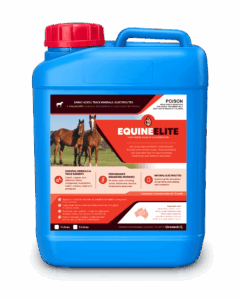
EquineElite
Best for: horse health, hydration and recovery, all year or at key times.
- 16 amino acids, 10 chelated trace minerals, plus iodine and calcium, and natural electrolytes in a single dose
- Helps support condition, coat shine, hydration and recovery
- No urea, and no complicated feed routine
- Every batch NATA tested, with a 3-year shelf life
Please note: EquineElite contains cobalt and selenium. Not for use in racing or performance horses where cobalt threshold regulations apply. Do not use within two weeks prior to racing. Selenium is needed in small amounts and too much can be harmful, so check your horse’s other selenium sources, such as hard feed, supplements or injections, and talk to your vet if you’re unsure. Never dose by mouth.
FAQ
Isn't my horse getting enough protein from hay and pasture?
It may well be getting enough crude protein. The question is whether it’s getting the right amino acids in a form it can absorb in the small intestine. Forage protein varies, and much of what reaches the hindgut isn’t absorbed as amino acids.
Several horses share one trough. How is it dosed?
The dose is worked out per horse: the number of horses on the water point multiplied by 20 mL for mature horses or 10 mL for younger and light horses. The total is split in half and added over two days, so every horse gets an even share. EquineElite doses are small, so it’s poured straight in rather than through the ProDispenser.
Can it go on feed instead?
Yes. Water is the preferred method, but EquineElite can also be mixed with feed or poured on hay. For several horses, mix the dose with enough water to pour evenly over the feed and add an extra 10% for wastage. It isn’t for dosing by mouth: always dilute it in the water or spread it through the feed.
Is EquineElite suitable for broodmares?
Yes. EquineElite is formulated to help support condition through reproduction and lactation in broodmares, and growth in young stock. Foals still with their mother don’t need their own dose; the mare’s fortnightly dose is all that’s needed until weaning.
My horse is already on a mineral supplement. Is that a problem?
Not at all. EquineElite is designed to work alongside your horse’s feed and other supplements, and its fulvic acid carrier is designed to help the horse make better use of them. It does contain copper and selenium, so avoid doubling up with other products that contain selenium. A vet can check a horse’s selenium status with a blood test.
Can StressGuard be used for horses?
Yes. All LivestockIQ products are safe for horses. StressGuard is designed for stress events such as transport, so horses should only drink from a StressGuard trough when they’re travelling or going through a stressful time. If horses share a trough with cattle or sheep on StressGuard and aren’t travelling, move them to another water point until the dose is finished. For everyday support, EquineElite is the product made for horses.
Is EquineElite suitable for racehorses or competition horses?
EquineElite contains cobalt and selenium. It is not for use in racing or performance horses where cobalt threshold regulations apply, and should not be used within two weeks prior to racing. Rules differ between disciplines, so it’s worth checking yours and talking to your vet.
Does it replace hay, hard feed or a calcium supplement?
No. EquineElite supports the diet rather than replacing it. Roughage is the foundation of every horse’s diet, and horses on high-oxalate grasses such as kikuyu still need an extra calcium source.
Why does EquineElite contain selenium and cobalt?
Selenium is an antioxidant that helps support muscle and immune function, and many Australian soils are low in it. Cobalt is used by microbes in the hindgut to make vitamin B12. Because selenium is needed in small amounts and too much can be harmful, EquineElite is always diluted through the water or feed and never given by mouth. If your horse already gets selenium from hard feed, another supplement or an injection, check with your vet before adding EquineElite.
Is EquineElite suitable for laminitis-prone or insulin-resistant horses?
Only on your vet’s recommendation, as part of an overall program your vet has set for the horse.
Sources
LivestockIQ, EquineElite fact sheet and 1 L label. Merck Veterinary Manual, Nutritional requirements of horses and other equids (N. Liburt, 2026), and Feeding the aged horse and the orphan foal. The Horse: K. Davison, Amino acids for equine muscle recovery (2025); M. Boast, High-quality protein: understanding amino acids in the equine diet (2023); E. Larson, Protein primer (2026); N. Liburt, Protein and amino acids for equine exercise demand (2016); S. Mastellar, Amino acids 101 (2015). Agriculture Victoria: Feed requirements of horses; Caring for horses during winter; Water for horses following fires. NSW DPI, Pastures for horses (Primefact 525).
Ready to set up your horse's program?
Your local reseller can help you get started with EquineElite.
Questions? Call (08) 8725 4668 or email [email protected]
Find your local stockist