

Transport, turnoff and feedlot entry
Long hauls cost weight. A 400 kg animal can lose 41 kg in 48 hours off feed and water.
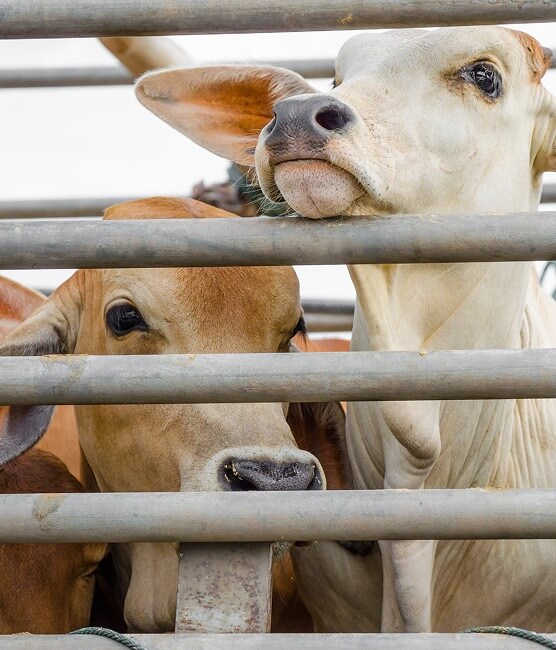
Northern cattle often travel further than anywhere else in the country, to ports, feedlots, backgrounding country or processors. Every hour off feed and water costs weight, and the stress can follow them into the feedlot. Preparation before they leave pays for itself.
What’s going on
The longer cattle are off feed and water, the more they lose. A 400 kg animal can lose around 25 kg in 6 hours, 32 kg in 24 hours, 41 kg in 48 hours and 49 kg in 72 hours. It generally takes 10 to 21 days to recover.[1]
Under the Land Transport Standards, most cattle over 6 months can spend up to 48 hours off water, then need a 36-hour spell before travelling again. Lactating cows with calves, calves aged 30 days to 6 months and cows 24 to 37 weeks pregnant have a 24-hour limit. Cows in late pregnancy should not be trucked.[2]
At the other end, bovine respiratory disease (BRD) is the main cause of illness and death in Australian feedlot cattle, and it’s most common in the first four weeks after entry. Tick zones and movement rules also apply, and they vary between states.[3]
What to watch for
- Long trips without planned spells, or trucking in the heat of the day
- Cattle that aren’t fit to load. Cows in late pregnancy should not be trucked.
- Mixing mobs just before trucking
- Coughing, nasal discharge or cattle standing off on their own after arrival (call your vet)
- Tick and movement paperwork for the destination
Nutrition at this stage
- Water and electrolytes: dehydration drives much of the weight loss on long hauls.
- Energy reserves: stress uses up muscle glycogen, which affects recovery and, for slaughter cattle, meat quality.
- Zinc, selenium and copper: support immune function, which stress pushes down for days after the trip.
- Amino acids such as threonine, arginine and glutamic acid: support gut health and recovery.
Where LivestockIQ fits
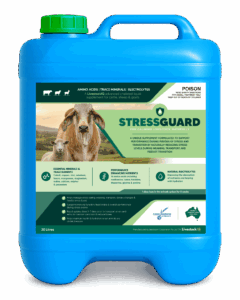
Cattle on a year-round program travel with steadier reserves. StressGuard then gives targeted support for the trip.
- Timing: dose 3 to 7 days before trucking. Never dose within 24 hours of loading.
- Rates: 20 mL (100 to 200 kg), 30 mL (201 to 300 kg), 40 mL (301 to 400 kg), 50 mL (401 kg plus and breeders).
- What it does: it helps support hydration, calmer travel and a faster return to feed and water, and may help reduce weight shrinkage.
- Tank or trough: on a central tank system, add the full dose to the tank closest to the stock.
- Feedlot entry: if cattle weren’t dosed before leaving, StressGuard can go in the water on entry instead. Use one or the other, not both. Dosed before trucking, StressGuard supports cattle for up to 4 to 6 weeks, so there’s no need to dose again on entry.
StressGuard replaces the regular dose. Allow at least 2 weeks since the last LivestockIQ dose. Follow the dose rates and instructions exactly, and don’t dose dehydrated animals.
FAQ
Can I dose StressGuard as the road train arrives?
No. That’s too late. Dose 3 to 7 days before trucking, and never within 24 hours of loading.
Sources
[1] FutureBeef, Liveweight loss and recovery in cattle.
[2] Australian Animal Welfare Standards and Guidelines: Land Transport of Livestock (as adopted in NSW, Prevention of Cruelty to Animals Amendment (Land Transport of Livestock) Regulation 2013).
[3] Meat & Livestock Australia, Bovine respiratory disease.
Ready to set up your herd's program?
Your local reseller can help you choose the right product and timing.
Questions? Call (08) 8725 4668 or email [email protected]
Running cattle in the south instead? See Southern systems