

Fibre goats: mohair and cashmere
Fibre is grown every day of the year. Steady nutrition shows up in the fleece.
Mohair grows about 2 cm a month, and Angoras are usually shorn every six months.[1] Every swing in feed between shearings is recorded in the fibre, so fibre goats reward a steady supply of nutrition all year round.
What’s going on
Fibre growth follows day length and feed supply: it speeds up as days lengthen or feed improves, and slows as they fall. That’s why winter fleeces are usually shorter than summer fleeces.[1]
Mohair is valued mainly on fibre diameter and length. It generally falls between 23 and 38 microns, with the finest fleece coming from young kids and diameter rising as goats get heavier.[1] Big swings in feed supply change fibre diameter along the staple and can create a weak point, although tenderness is less common in mohair than in wool.[1]
The doe herd is the hardest to manage. During pregnancy and lactation an Angora doe is growing fleece as well as kids, which takes extra energy, and does raising multiples need extra feed and support at kidding.[1]
Cashmere is a fine winter undercoat that grows as day length shortens, under an outer coat of coarse guard hair.[4] It’s harvested once a year,[5] usually by shearing, and the hair is later removed from the down by specialised processing.[4][6]
Shearing is a high-risk time. Angoras are very prone to cold stress after shearing, especially in wet, windy weather or a sudden temperature drop, so effective shelter is critical.[1] The 2026 goat welfare standards now include a dedicated fibre chapter.[2]
What to watch for
- Weight loss or a feed gap between shearings, which shows up as uneven fibre
- Does in late pregnancy and lactation losing condition while also growing fleece
- Cold, wet, windy weather in the weeks after shearing
- Kids and young goats, whose finer fleece is the most valuable in the clip
- Trace element gaps on your country, especially zinc, copper and cobalt
Nutrition at this stage
Fibre is almost entirely protein, so a fibre goat needs a steady supply of the building blocks every day, not just in good seasons.
- Protein and sulphur-containing amino acids: the raw material for fibre. Mohair is high in sulphur, and MLA gives a specific sulphur requirement for mohair production.[3]
- Zinc: supports skin and fibre production. MLA lists a separate zinc requirement for mohair.[3]
- Copper: supports normal fibre structure and colour.
- Cobalt: supports vitamin B12 production and appetite.
- Energy: needed to turn protein into fibre, and to hold condition through cold after shearing.
Where LivestockIQ fits
Fibre goats suit a year-round program better than almost any other goats, because they grow fibre every day.
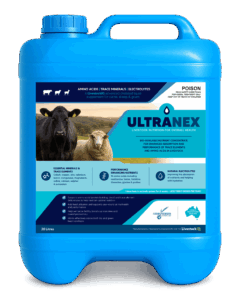
Dosed every 6 weeks all year, it helps support fibre growth and condition across the whole fleece, not just one window.
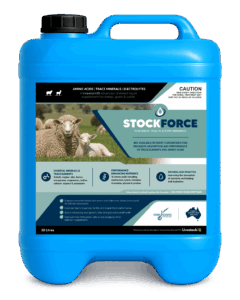
If your herd is already on a selenium program. It’s selenium-free, so there’s no doubling up.
Adults are dosed at 10 mL a head through the water trough, with kids dosed by weight.
FAQ
When's the most important time to dose fibre goats?
All year. Fibre is grown continuously, so steady nutrition between shearings matters more than any one window. If you have to prioritise, the months either side of kidding are when does are under the most pressure.
Can I dose around shearing?
Yes. Water dosing doesn’t need any yarding, so it fits around shearing without extra handling.
Sources
[1] MLA, Going into Goats Module 10: Mohair production.
[2] Animal Health Australia, 2026 Goat Welfare Standards and Guidelines.
[3] MLA, Going into Goats Module 7: Nutrition.
[4] Australian Cashmere Growers Association, Goat Note A2: Australian Cashmere in Perspective.
[5] Australian Cashmere Growers Association, The Australian Cashmere Story.
[6] NSW DPI, Agfact A7.8.12: Shearing cashmere goats.
Ready to set up your herd's program?
Set up a year-round fibre program with the DoseIQ Calculator, or find your nearest stockist.
Questions? Call (08) 8725 4668 or email [email protected]