

Late pregnancy and pregnancy toxaemia
Kids put on most of their birthweight in the last six weeks. That’s when does need steady feed and minimal stress.
A kid gains around 70% of its birthweight in the last six weeks of pregnancy.[1] The doe’s energy needs climb fast just as the growing kids leave less room for feed, and does carrying twins or a big single are the most at risk when things go wrong.
What’s going on
Pregnancy toxaemia, also called twin kid disease, strikes in the last month of pregnancy. When the doe can’t eat enough to meet the energy demand of fast-growing kids, she breaks down body fat instead, and the ketones this produces can build to toxic levels. It’s serious and often fatal if not caught early.[2]
It isn’t only a thin-doe problem. Fat does are at particular risk, especially in small yards with little exercise, and so are dominant does that push others off grain. Sudden feed changes, cold wet weather, and rough handling or transport can tip a doe over.[2]
Nutritional stress can also cause does to abort, and mustering heavily pregnant does can do the same.[1]
Does carrying multiples face a second risk around kidding. Blood calcium can drop as the doe starts producing colostrum, so does about to kid or that have just kidded are at risk of milk fever (hypocalcaemia).[1] Magnesium matters too. Grass tetany (low blood magnesium) is less common in goats than in sheep or cattle, but it can strike does kidding onto lush, grass-dominant pasture that is low in legumes, mostly in southern states.[1][3] Goats can also kid again quickly, with does able to cycle as soon as five days after kidding in good seasons, so there’s little time to rebuild between pregnancies.[1]
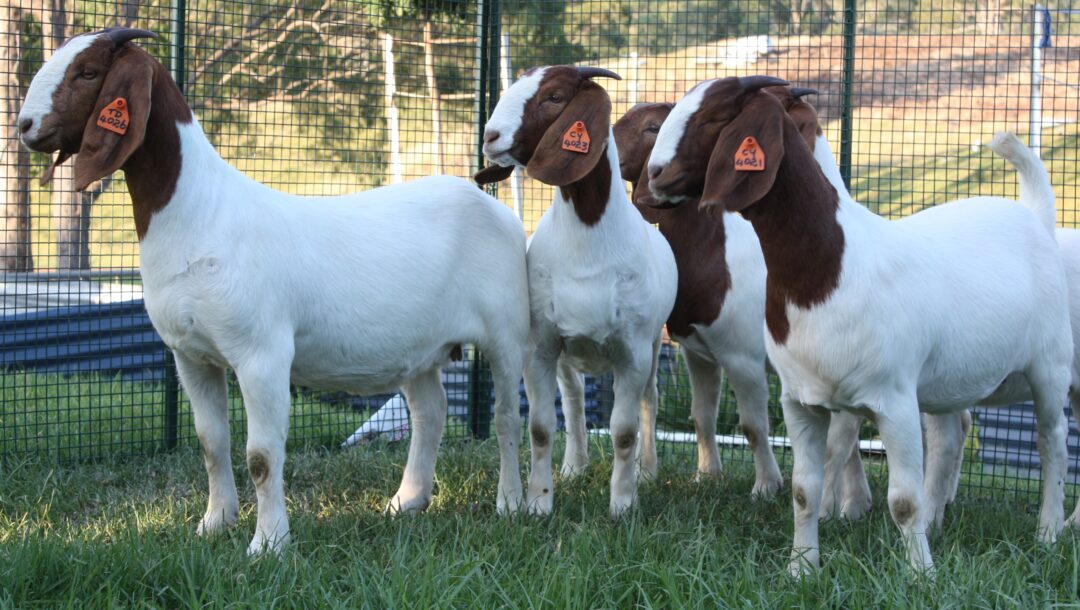
What to watch for
- Does lying down for long periods, walking stiffly, or with swollen lower legs
- Does going off feed, losing condition fast or grunting
- A sweet, ketone smell on the breath[2]
- Does carrying twins or triplets (scanning helps you split and feed them separately)[1]
- A feed gap, sudden ration change or a cold, wet spell in the last six weeks
- Heavily pregnant does being yarded, mustered or trucked
- Does kidding onto lush, fast-growing, grass-dominant pasture, especially in southern winter and spring
- Trembling, staggering or a doe down close to kidding, which can also point to low calcium or magnesium. Pregnancy toxaemia, milk fever and grass tetany can look alike, so get your vet to confirm
Call your vet straight away if you suspect pregnancy toxaemia. Early action matters.
Nutrition at this stage
The aim is steady, adequate nutrition all the way to kidding: no big swings, no sudden changes, and does in moderate rather than fat condition.[2]
- Energy: the doe’s most important need in late pregnancy, and the one most likely to fall short.
- Protein and amino acids: build the kids and the doe’s colostrum and milk.
- Selenium: supports kid vigour and immune function. MLA’s goat guidance gives selenium to does before joining and again one month before kidding in deficient areas.[3]
- Iodine: supports normal thyroid function in the kids. Iodine-deficient kids can be born weak or with goitre.[3]
- Zinc and copper: pass to the kids and support their immune function and early growth.
- Magnesium: supports nerve and muscle function and energy use. Requirements rise over the last 50 days of pregnancy, and lush grass-dominant feed, potash fertiliser and high-protein pasture can all reduce how much the doe absorbs.[3]
Where LivestockIQ fits
Year-round is best, so does reach late pregnancy already topped up. If you can’t run a year-round program, start 12 weeks before kidding and dose every 6 weeks, so does get two doses before kidding.
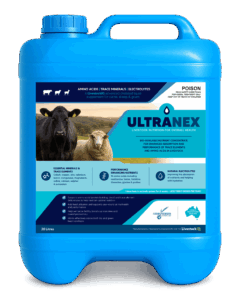
The core product for most herds. It helps support the doe and the developing kids through late pregnancy.
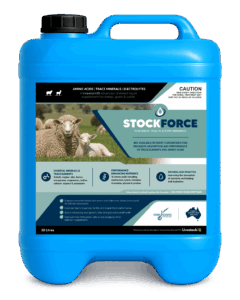
If your does are already on a selenium program. It’s selenium-free, so there’s no doubling up.
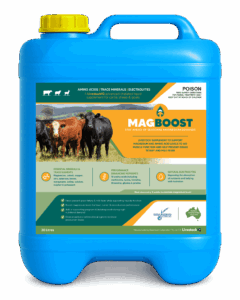
If your does kid onto lush, fast-growing feed or through cold, wet weather, start MagBoost about 6 weeks before kidding. Give a 10 mL loading dose, then 5 mL a head every 3 weeks through the risk window. It supports the peak magnesium and calcium demand of late pregnancy and early lactation, and aids in the prevention of grass tetany and milk fever. It also helps support the development and survival of young animals, particularly multiples. MagBoost contains selenium, so it isn’t suitable for herds already on a selenium program. Talk to us about the best option for your herd.
Dosing goes through the water trough, so there’s no yarding or handling of heavily pregnant does.
FAQ
Does LivestockIQ stop pregnancy toxaemia?
No product can claim that. Pregnancy toxaemia is mainly an energy problem, managed through feed, condition and low stress. A year-round program helps support the doe’s overall nutrition alongside good feed management.
Can I truck does in late pregnancy?
Does more than 14 weeks pregnant can only be off water for a maximum of 24 hours, and the land transport standards set tighter rules again for does in the last 2 weeks of pregnancy. Talk to your transporter before booking.[4]
Can I run MagBoost and my year-round product together?
No. Never run two LivestockIQ products through the trough at once. Through the risk window, run MagBoost on its 3-week cycle, then go back to the year-round program once the risk eases.
A doe is already down. Will MagBoost help?
No. MagBoost is used ahead of the risk window, not as a treatment. A down doe needs your vet.
Ready to set up your herd's program?
Plan your pre-kidding program with the DoseIQ Calculator, or find your nearest stockist.
Questions? Call (08) 8725 4668 or email [email protected]