

Heifers: growing replacements
Well-grown heifers milk more and last longer.
Heifers that are 50 kg heavier at calving produce around 1,041 more litres of milk over their first three lactations.[1] Hitting growth targets is one of the best long-term investments in the herd.
What’s going on
The target is for heifers to calve at around 24 months, joined at 13 to 15 months in seasonal and split-calving herds.[1] Weight matters more than age. In one study, 30% of heifers were cycling at 200 kg, compared with 65% at 260 kg.[1]
Heifers that reach their targets compete better with older cows and stay in the herd longer.[2] Those that don’t are at risk: in one New South Wales study, a third of first-calvers were culled before their second calving.[1]
Heifers often spend much of their first two years away from the milking platform, on a run-off block or on agistment, where they’re seen less often and fed less precisely. That makes it easy for growth to slip without anyone noticing.
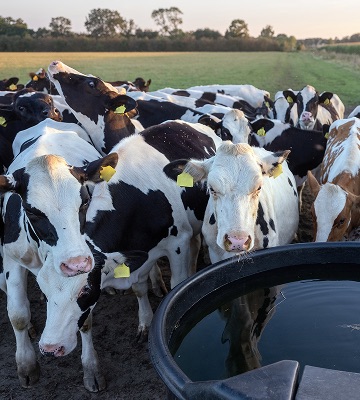
Liveweight targets (% of mature cow weight)
| Age | Liveweight target |
|---|---|
| 6 months | 30% |
| 15 months (mating) | 60% |
| First calving (22 to 24 months) | 85 to 90% |
Sources: InCalf[2]; Growing More Productive Heifers[1]
For a herd with a mature cow weight of 600 kg, that means about 180 kg at 6 months, 360 kg at mating and 510 to 540 kg at calving.
What to watch for
- Heifers below target weight for their age; Dairy Australia suggests weighing about every three months[2]
- Uneven groups, with a tail of small heifers
- Poor growth after weaning or on dry feed
- Signs of trace element gaps, such as poor coats or slow growth
Nutrition at this stage
- Energy and protein: to keep growth on track, at least 0.7 kg a day for Holsteins and 0.5 kg a day for Jerseys from weaning to 9 months.[1]
- Trace elements: selenium and copper deficiency is common in much of Australia, and cobalt deficiency can occur, especially in southern Australia.[1]
- Calcium and phosphorus: southern pasture may not supply enough for skeletal growth.[1]
Transport
Heifers often move to and from agistment or are sold as springers. Cattle more than 6 months pregnant (excluding the last 4 weeks) can be off water for a maximum of 24 hours, and cattle in the last 4 weeks of pregnancy should only travel under veterinary advice unless the trip is under 4 hours.[3]
Where LivestockIQ fits
Dosed by weight every 6 weeks through the trough, from 20 mL a head at 100 to 200 kg up to 50 mL at 401 kg and over. A steady supply of trace elements and amino acids helps support growth and condition, wherever heifers are run. Water dosing suits run-off and agistment blocks, where there’s no daily handling.
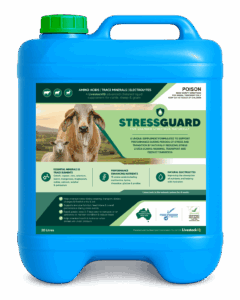
Before trucking to or from agistment, StressGuard is given 3 to 7 days before loading and never within 24 hours of loading, in place of the regular dose. It helps support hydration and recovery, and may help reduce weight shrinkage on the trip. In a University of Adelaide trial, steers given StressGuard through the water before a long transport had lower average cortisol, a key stress hormone, on arrival than steers that weren’t.[4]
FAQ
My heifers are on agistment. Can they still be on a program?
Yes. The ProDispenser goes in the agistment trough and meters the dose over three days. Check with the property owner if other stock share the water.
When should I start heifers before joining?
Around 12 weeks before mating, so they have two doses before joining starts.
Sources
[1] Dairy Australia, Growing More Productive Heifers.
[2] Dairy Australia, InCalf Book for Dairy Farmers.
[3] Land Transport of Livestock Standards and Guidelines, version 1.1.
[4] University of Adelaide, Roseworthy campus trial for LivestockIQ (then Beachport Liquid Minerals), C. Coker, 2021. Trial results booklet.
Ready to set up your herd's program?
Work out heifer doses by weight with the DoseIQ Calculator, or find your nearest stockist.
Questions? Call (08) 8725 4668 or email [email protected]