

Feedlot induction and backgrounding
The first four weeks in the feedlot carry the most risk. Preparation starts at home.
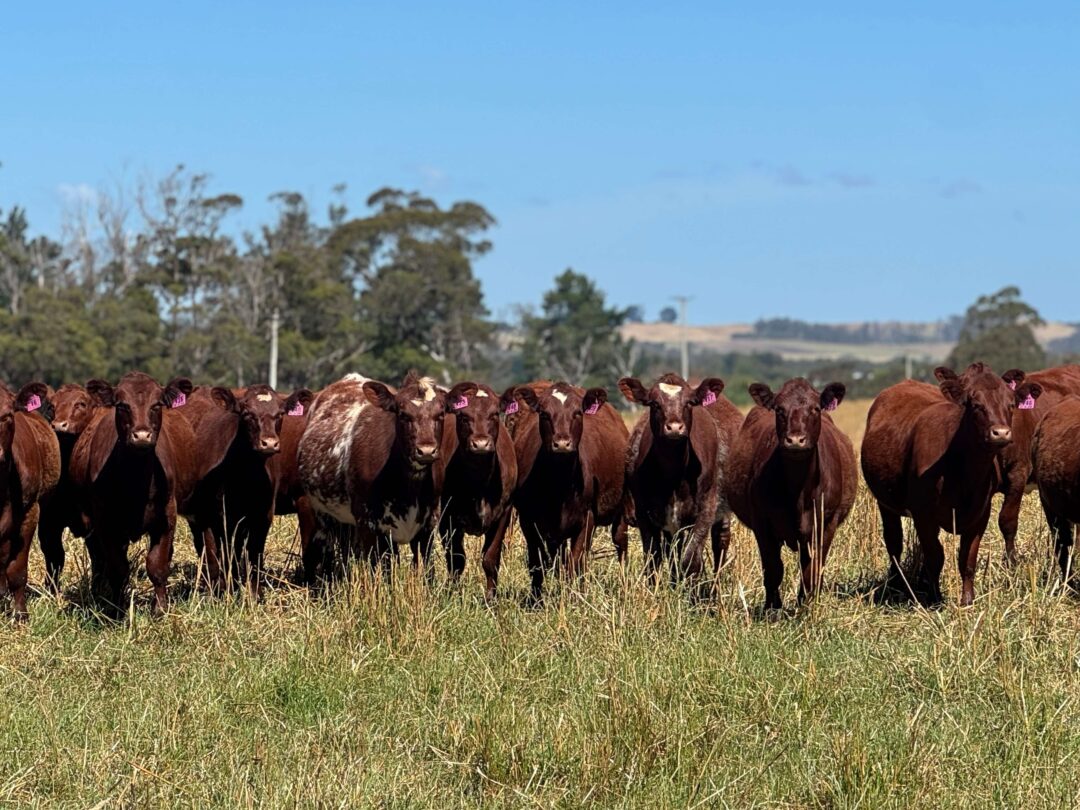
Cattle that arrive at the feedlot settled, healthy and ready to eat start gaining straight away. Most of that is decided before they leave home, during backgrounding, yard weaning and the trip in.
What’s going on
Backgrounding grows cattle out on pasture or forage before they go on feed, and is the time to vaccinate, educate them to yards and troughs, and build reserves.
Induction stacks trucking, mixing, a new pen, new water and a switch to grain. Bovine respiratory disease (BRD) is the most common cause of illness and death in Australian feedlot cattle, and it’s most common in the first four weeks after entry.[1]
The step-up to grain needs to happen gradually over 2 to 3 weeks, because a sudden jump can cause grain poisoning (acidosis).[2]
What to watch for
- Cattle not at the feed bunk or water trough in the first few days
- Coughing, nasal discharge or cattle standing off on their own (call your vet)
- Scouring, bloat or lameness as grain intake builds
- BRD vaccinations not done, or the booster missed
- Long trips, long curfews or mixing just before feedlot entry
Nutrition at this stage
- Protein and amino acids such as lysine and methionine: the building blocks of muscle and growth.
- Zinc, copper and selenium: support immune function, under the most pressure in the first weeks after entry.
- Water and electrolytes: hydration is critical on arrival.
What happens at home carries into the feedlot. Cattle backgrounded on lush green feed can look in great condition and still be short of trace elements that depend on the soil.
Where LivestockIQ fits
StressGuard for the move
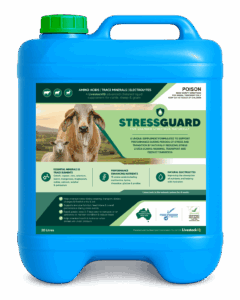
Dose 3 to 7 days before trucking to the feedlot, or, if the cattle weren’t dosed before leaving home, in the water on entry. Use one or the other, not both. Dosed before trucking, StressGuard supports cattle for up to 4 to 6 weeks, so there’s no need to dose again on entry. Dose again 3 to 7 days before trucking to processing.
Leave at least 2 weeks between LivestockIQ doses. For programs inside the feedlot, call head office on (08) 8725 4668.
FAQ
Will StressGuard replace BRD vaccination?
No. Vaccination during backgrounding, with a booster before or at induction, is the foundation. StressGuard supports the animal’s stress and immune response alongside it.[3]
Ready to set up your herd's program?
Call head office on (08) 8725 4668 for a feedlot program, or find your nearest stockist.
Questions? Call (08) 8725 4668 or email [email protected]
Running cattle in the north instead? See Northern systems