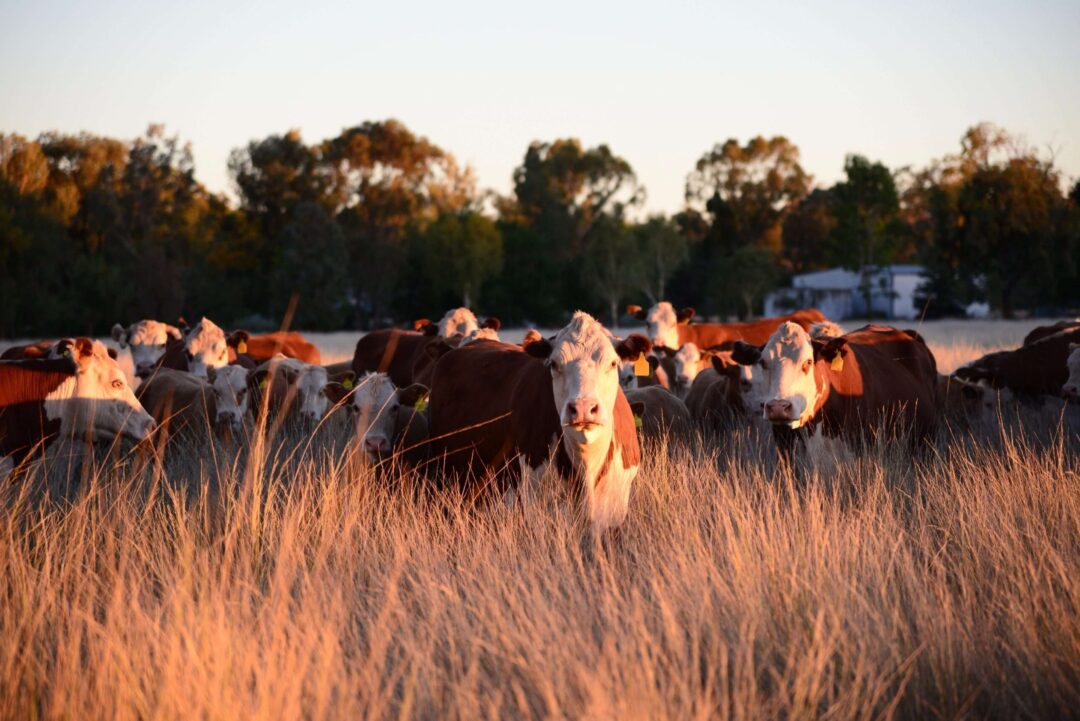
Protecting livestock when risk is highest. Grass tetany remains one of the most costly and sudden metabolic challenges in Australian livestock systems. It often strikes when feed looks at its best, lush, fast-growing pastures, yet animals can rapidly become magnesium deficient.
Prevention is critical because once clinical signs appear, outcomes can deteriorate quickly. Supporting magnesium levels before risk periods is the most reliable way to protect both production and animal welfare.
Rapid spring growth, cold wet conditions and sudden diet change can all reduce an animal’s ability to absorb magnesium from the rumen. At the same time, demand for magnesium increases.
Demand for magnesium increases in:
Late pregnancy
Early lactation
Young fast-growing stock
Cold or wet weather
High nitrate or high potassium pastures
Magnesium, combined with key amino acids, is essential for all major muscles including the heart, rumen and uterus.
In both regions, the challenge is the same: animals cannot access enough magnesium quickly enough to meet metabolic demand.
Southern systems
Risk is commonly linked to:
Northern systems
Risk often increases with:
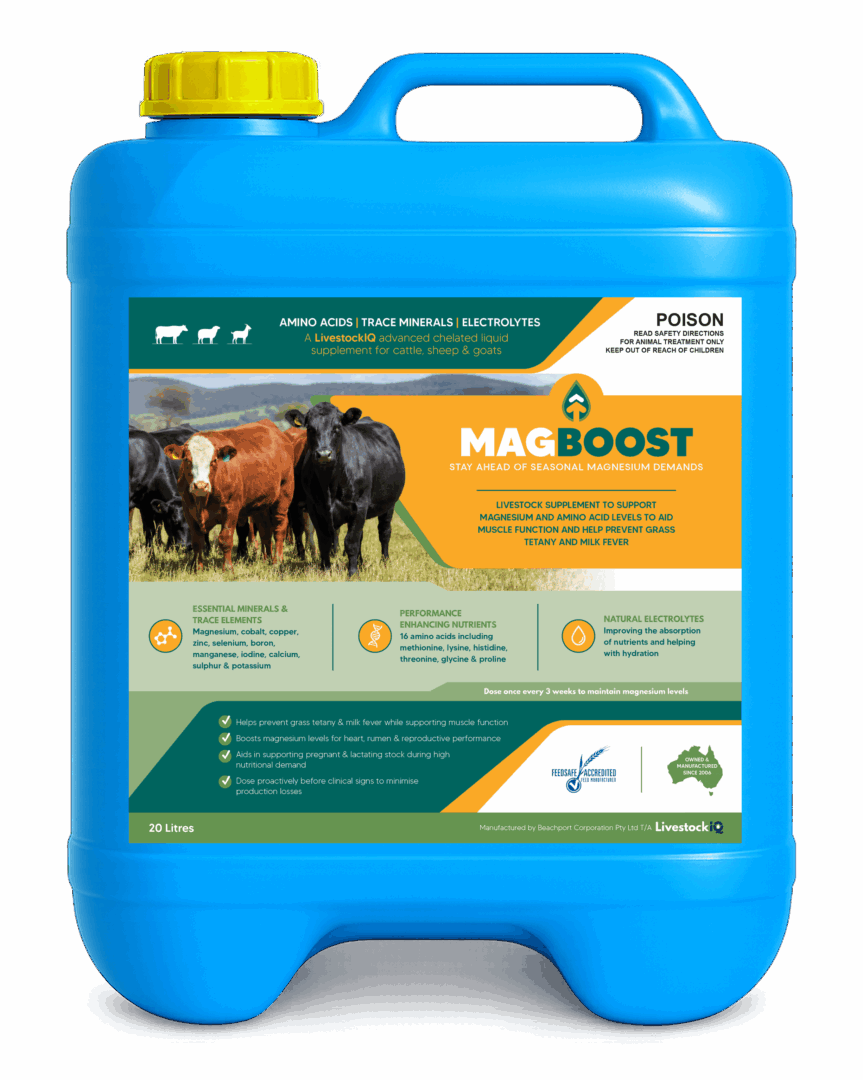
MagBoost is specifically formulated to help increase magnesium and amino acid levels.
It supports
Key benefits
Use MagBoost proactively during:
Pre-calving and pre-lambing
Early lactation
Rapid green feed growth
Cold, wet weather
Known grass tetany districts
Systems with multiple births, sheep and goats
Prevention is better than needing a cure. Begin with a full dose, then continue every three weeks while seasonal risk remains.
Less handling and stress on late-pregnant females.
How MagBoost fits with your program
Improved nutrition for the mother means more milk and less weight loss, helping breeders return to pregnancy more successfully while offspring are stronger and not left behind in growth.
Better milk let-down and consistency
Stronger newborns, especially multiples
Improved appetite on lush feed
Reduced metabolic setbacks
Females holding condition longer
Your LivestockIQ representative can help plan regional risk timing, pre-lambing and calving programs, and integration with existing cycles.
New in the range
Boron is a trace mineral that works behind the scenes. Rather than doing one job on its own, it influences how the body handles other key minerals. That’s why it’s now included in our conventional livestock formulations.
* This product is allowable for use on farms (or in facilities) certified to the Australian Certified Organic Standard.
1. Spears JW (2019). Boron, chromium, manganese, and nickel in agricultural animal production. Biological Trace Element Research 188: 35-44.
2. Abdelnour SA et al. (2018). The vital roles of boron in animal health and production: a comprehensive review. Journal of Trace Elements in Medicine and Biology 50: 296-304.
3. Basoglu A et al. (2017). Effects of boron supplementation on peripartum dairy cows' health. Biological Trace Element Research 179: 218-225.
4. Celik C, Cetinkaya N (2025). Effects of boron supplementation in dairy cow close-up rations on colostrum quality and certain blood metabolites in calves. Biological Trace Element Research 203: 3075-3087.
One dose at the trough. Around six weeks of nutrition.
The next chapter
A new name for the next chapter of our family business. Same team, same science and the same one-dose trough application, with a bigger vision for the future of Australian livestock nutrition.