

Rangeland goats: trapping, depots and transport
From trap yard to truck, rangeland goats go through more change in a week than most goats see in a year.
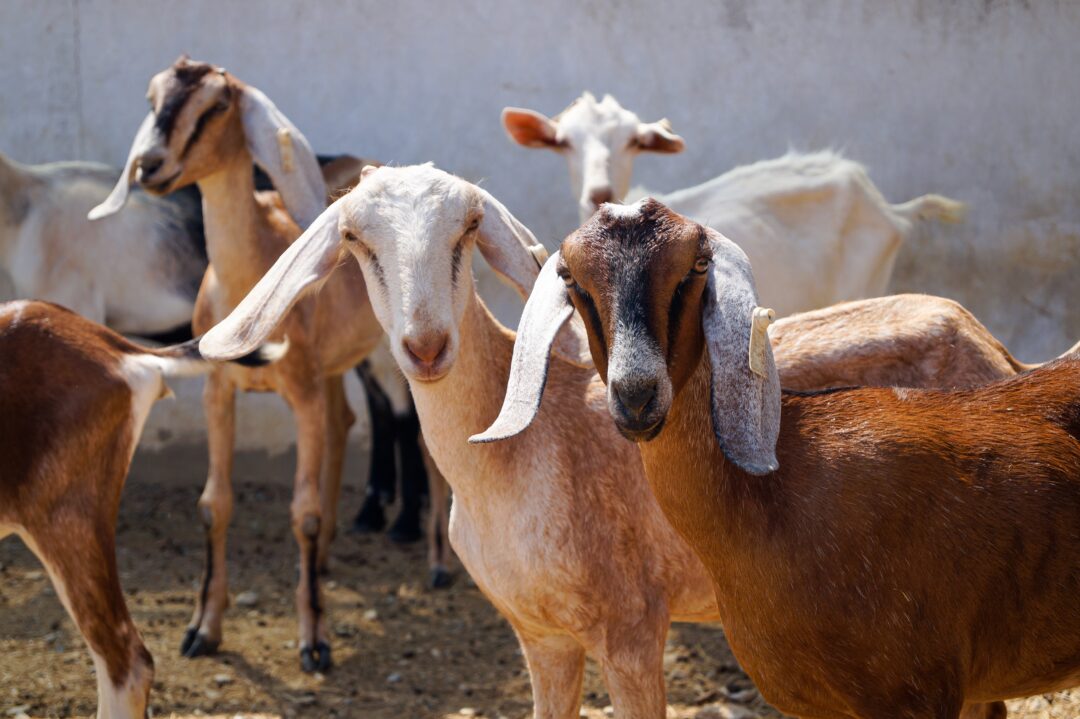
Rangeland goats supply more than 90% of Australia’s goat production.[1] Most go from open country to a trap yard, a depot and a truck within days, swapping familiar browse and water for yards, hay and a new routine. How well they handle that shift shows up in shrink, condition and how many arrive in good shape.
What’s going on
Trapping usually means fencing goat-proof yards around water, with one-way gates or ramps, so goats are captured when they come in to drink.[2] Once yarded, many operators give fresh water and hay before trucking, particularly where goats have been drinking salty water.[2]
Depots aggregate goats for processors and exporters, usually for a short stay of around 4 to 10 days. Goats arriving at a depot should be encouraged to eat as soon as possible, with good-quality pasture hay for the first few days and other rations introduced gradually. Shy feeders need pulling out and feeding in a less competitive pen.[3]
The change from browse to a yard ration is a big shift for the rumen. Gradual ration changes help avoid digestive upsets, and goats moving into a depot or feedlot need a 5-in-1 vaccine to cover pulpy kidney.[4]
Transport limits are set by the land transport standards. Goats over 6 months can be off water for a maximum of 48 hours, kids under 6 months for 28 hours, and does more than 14 weeks pregnant for 24 hours. That time includes mustering, yarding and the trip.[5]
The 2026 Australian Animal Welfare Standards and Guidelines for Goats, released this year, cover everything from harvested rangeland goats to intensive systems.[6]
What to watch for
- Goats that won’t eat or drink in the first days at a depot
- Shy feeders losing condition in a crowded pen
- Scouring or bloat after a fast switch to grain or pellets
- Long time off water across trapping, holding and trucking
- Heavily pregnant does and young kids in mixed consignments
- Paperwork: every movement to and from a depot needs a completed LPA NVD, and mob-based NLIS movements must be uploaded within 48 hours[3]
Nutrition at this stage
Rangeland goats rarely need supplementing in their natural environment, because their broad, browse-heavy diet lets them find what they need.[2] The pressure points are the days in yards and depots, when that diet disappears.
- Water: the first priority after capture. Dehydrated goats eat less and shrink more.
- Energy and roughage: good hay first, then gradual ration changes, keep the rumen working.
- Electrolytes: support hydration through yarding and transport.
- Selenium and zinc: support immune function, which stress pushes down for days after trapping and trucking.
- Amino acids: support the return to feed and recovery of condition.
Where LivestockIQ fits
Rangeland goats are a natural fit for water dosing, because trapping already brings them to the trough.
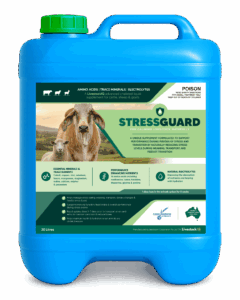
StressGuard on depot entry
Add it to the water as goats arrive. It helps support stress and immune function, and an earlier return to feed and water. It replaces the regular dose.
StressGuard before trucking
Dose 3 to 7 days before trucking, and never within 24 hours of loading. It helps support hydration and recovery, and may help reduce weight shrinkage on the trip.
For managed rangeland herds and breeding operations, a six-weekly program through the trap-yard waters helps support condition between musters.
StressGuard contains selenium. If your herd is normally on StockForce because of a selenium program, follow the StressGuard dose rates and instructions exactly, and don’t dose dehydrated animals. Let goats rehydrate on clean water first.
FAQ
Can I dose StressGuard on the day the truck arrives?
No. That’s too late. Dose 3 to 7 days before trucking, and never within 24 hours of loading.
My goats come in off salty water. Is that a problem?
Give them fresh water to drink first and let them rehydrate before StressGuard goes in. Goats on saltbush or bluebush country also tolerate less salt in their water.[4]
How do I dose a trap yard?
Through the water point inside the trap. A ProDispenser meters the dose into the water line, so goats get it every time they come in to drink. It’s a big advantage in a trap yard: goats are dosed with no handling at all, and goats are highly stressed by yarding and transport.
Sources
[1] Goat Industry Council of Australia, Research and development.
[2] MLA, Going into Goats: A practical guide to producing goats in the rangelands.
[3] MLA, Going into Goats Module 11: Goat depots.
[4] MLA, Going into Goats Module 7: Nutrition.
[5] MLA, Time off water and spelling periods.
[6] Animal Health Australia, 2026 Goat Welfare Standards and Guidelines.
Ready to set up your herd's program?
Use the Dose Calculator to work out your StressGuard dose, or find your nearest stockist.
Questions? Call (08) 8725 4668 or email [email protected]