Pregnancy and lactation
Building strong mothers and strong offspring. The job isn’t finished when a female conceives, it’s only just beginning. Pregnancy and early lactation are the most nutritionally demanding stages of the entire production cycle.
Success at this stage determines:
- Calf and lamb birth weight
- Colostrum quality and early immunity
- Milk production and growth to marking
- The female’s ability to rejoin on time
If key nutrients fall short, the cost shows up as lighter offspring, poorer milk and reduced lifetime productivity.
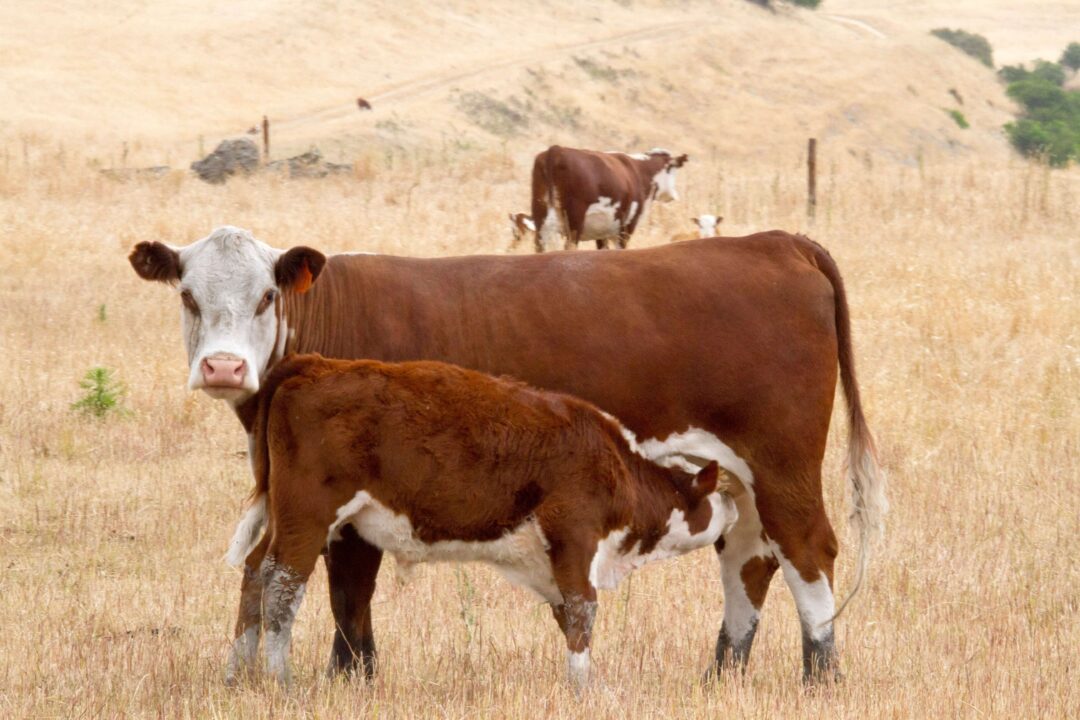
What changes after joining
Once in calf, nutrients are prioritised toward the pregnancy, while the breeder still has to cope with the season.
Nutrients are prioritised toward
- Placental development
- Foetal growth
- Colostrum formation
- Milk production
- Recovery of the dam for the next joining
At the same time breeders must cope with
- Summer heat and dehydration
- Winter cold stress
- Feed gaps or rapid pasture change
- Handling events around scanning, crutching or calving
Without the right nutritional support, females can lose condition exactly when demand is highest.
Why these nutrients matter
Three groups, three jobs.
Trace elements, the engine room
- Placental and foetal development
- Immune strength of newborns
- Colostrum quality
- Metabolic efficiency in late pregnancy
Amino acids, the building blocks
- Milk protein production
- Muscle maintenance in the dam
- Growth of the developing foetus
- Recovery after birth
Magnesium and electrolytes, the lactation link
- Nerve and muscle function
- Calcium mobilisation
- Appetite during early lactation
- Milk let-down and consistency
Together, up to 11 trace elements and 15 amino acids, supported with magnesium when required, help breeders convert available feed into milk, growth and resilience.
Common signs nutrition is limiting
These issues often appear even when pasture quantity looks adequate.
- Calves or lambs born lighter than expected
- Weak newborns or slow to mother up
- Poor colostrum and early growth
- Females slipping body condition in late pregnancy
- Reduced milk during peak lactation
- Lower rebreed performance next joining
- Nervous or unsettled cows and ewes after calving
Magnesium, milk production and milk fever
Magnesium plays a critical role in how animals use calcium and energy during early lactation. When magnesium levels are low, the body struggles to mobilise calcium effectively, which can reduce milk let-down and increase the risk of metabolic disorders such as milk fever.
Low magnesium can contribute to
- Reduced milk volume and consistency
- Slower let-down after calving or lambing
- Nervous or unsettled cows and ewes
- Poor appetite during peak demand
- Greater risk during lush spring feed or cold, wet weather
MagBoost supports this period by helping to
- Maintain magnesium levels when demand is highest
- Support normal nerve and muscle function
- Assist calcium utilisation in early lactation
- Encourage appetite and steady milk flow
Periods of highest risk include the first weeks after calving or lambing, lush fast-growing pastures, sudden diet changes, and cold or wet conditions.
How LivestockIQ programs fit
A base program from mid-pregnancy through to weaning, with magnesium support where risk exists.
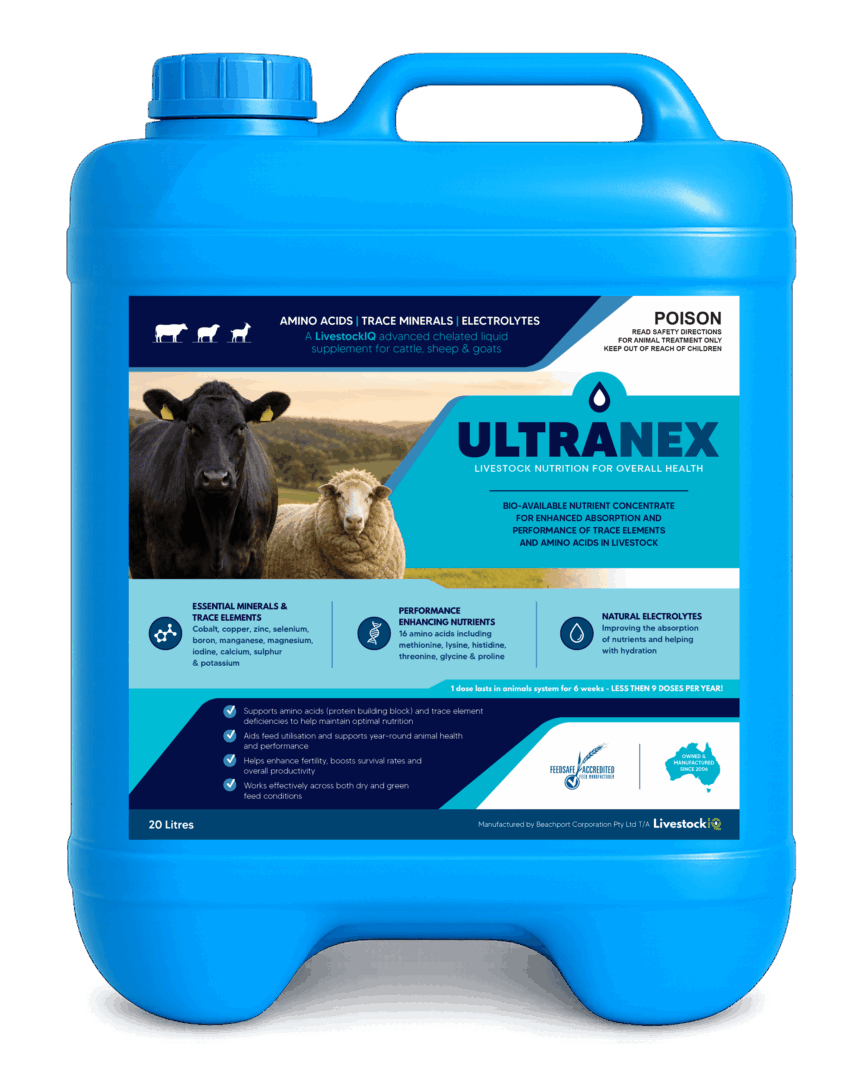
Ultranex
Pregnancy and lactation foundation.
Applied every 4 to 6 weeks, ULTRANEX supports:
- Maintenance of breeder condition
- Colostrum and milk production
- Foetal growth and birth weight
- Immunity in both dam and offspring
- Performance across dry to green feed changes
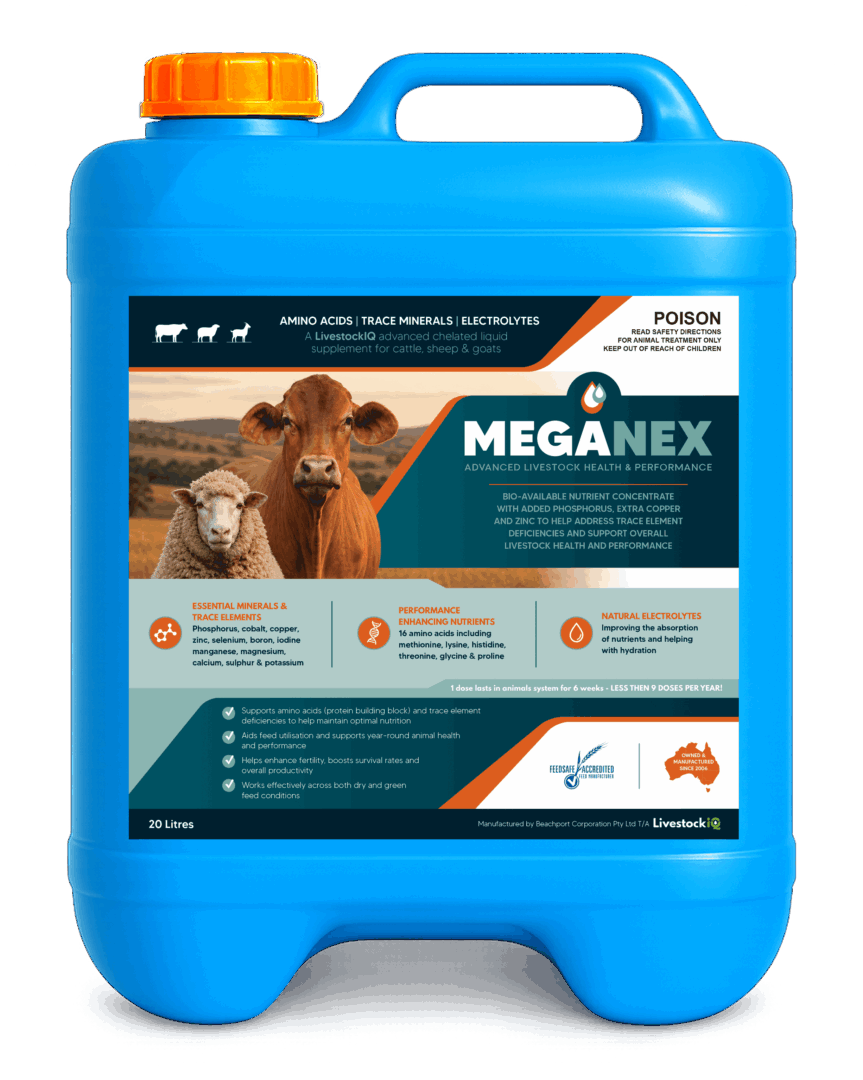
Meganex
Higher demand systems.
Where copper and zinc demand is greater, MEGANEX provides extra support for:
- Immune strength around calving and lambing
- Hoof and skin integrity in late pregnancy
- Milk and tissue repair
- Stronger, more vigorous newborns
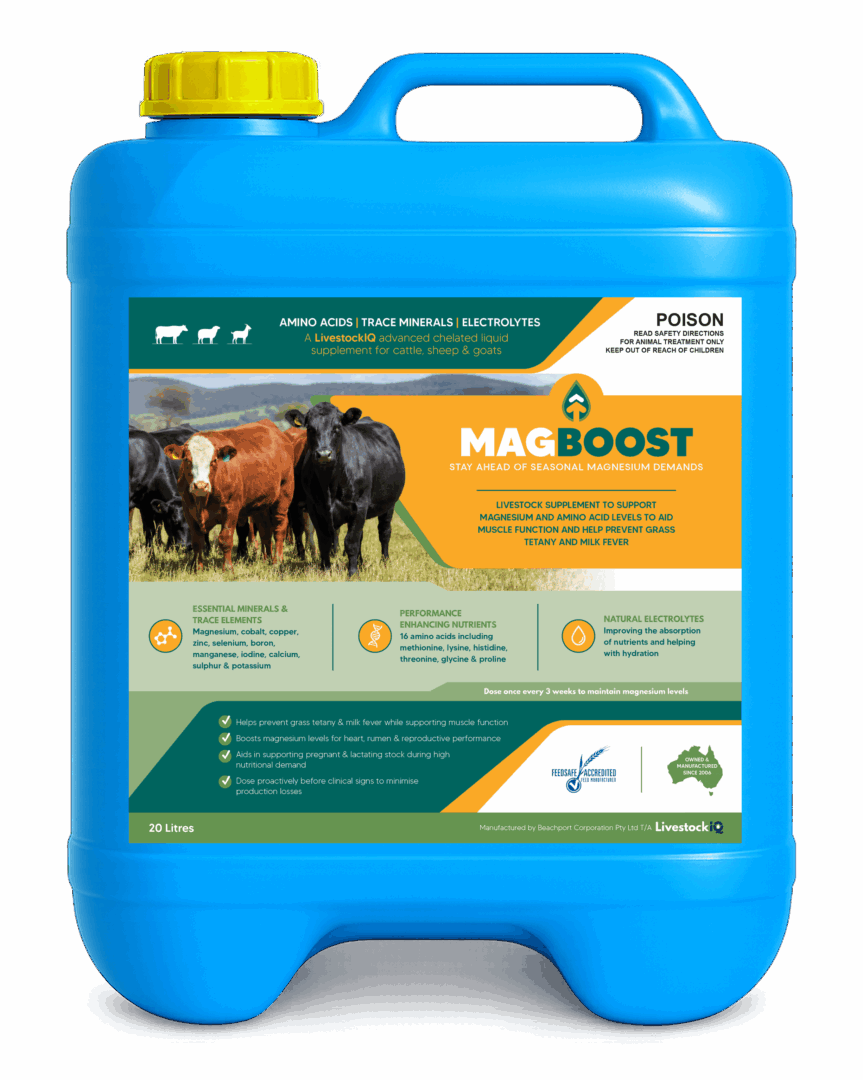
MagBoost
Supporting magnesium and milk.
Designed for periods when magnesium demand is highest:
- Spring flush or lush pastures
- Early lactation in dairy or high-producing breeders
- Cold, wet conditions
- Systems with known grass tetany or milk fever risk
Maintaining magnesium levels helps cows and ewes hold milk flow and appetite, supporting stronger growth in young stock.
Key production windows
Your LivestockIQ representative can help align a program to your calving or lambing dates.
Mid to late pregnancy
- Support placental development
- Maintain body condition
- Prepare for colostrum demand
Calving and lambing
- Stronger newborns
- Better mothering up
- Early immunity via quality colostrum
Early lactation
- Milk volume and consistency
- Reduced weight loss in dams
- Better growth to marking or weaning
- Support where milk fever risk exists
Relevant LivestockIQ solutions
What producers commonly see: more vigorous calves and lambs, improved mothering ability, better early growth rates and females holding condition longer.