

Early lactation and milk production
Peak milk arrives before peak appetite.
Milk production and energy needs peak around 6 to 10 weeks into lactation, but a cow’s appetite doesn’t peak until 8 to 12 weeks.[1] That gap is why early lactation is such a demanding time.
What’s going on
In early lactation, most cows can’t eat enough to cover what they’re putting into the vat, so they draw on body reserves. This negative energy balance can typically last up to three months.[2] Some loss of condition is normal, but cows that lose too much are less fertile.[3]
Ketosis is most common in the first two weeks of lactation, with risk through the first six weeks.[4] Cows that calve too fat eat less and are at higher risk of ketosis and fatty liver.[5]
Protein is the other big demand. Milk protein is built from amino acids, and methionine and lysine are the amino acids most likely to run short, especially in early lactation.[1] Early spring pasture can be very high in crude protein, often up to 30% of dry matter, yet amino acids can still be in short supply for high-producing cows.[6] Total protein on paper isn’t the same as the building blocks the cow can use for milk.
What to watch for
- Cows losing more than one condition score between calving and mating[3]
- Cows off their feed or dropping milk in the first weeks after calving
- Milk fat dropping on lush pasture or high-grain, low-fibre diets[7]
- Fresh cows that are slow to reach peak
Body condition targets (1 to 8 scale)
| Stage | Target |
|---|---|
| At calving | Herd average 5.0, with no more than 15% of cows below 4.5 or above 5.5[2][3] |
| Calving to mating | Herd average loss of no more than 0.6 of a score[3] |
| Two weeks before mating | Herd average no lower than 4.5[2] |
Nutrition at this stage
- Amino acids: methionine and lysine are the first limiting amino acids for milk protein. A diet can meet crude protein targets and still be short of them.[1]
- Energy: the main driver of milk volume and how quickly cows recover condition.
- Calcium, phosphorus and magnesium: in heavy demand for milk. Dairy Australia’s early lactation targets are 0.8 to 1.0% calcium, 0.4% phosphorus and 0.3% magnesium in the diet’s dry matter.[2]
- Trace elements: zinc, copper and selenium support immune function and udder health while the cow is under pressure.
Where LivestockIQ fits
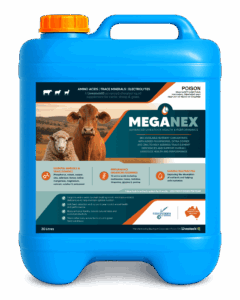
For high-producing herds. It supplies 16 amino acids preformed, including methionine and lysine, along with phosphorus, chelated trace elements and natural electrolytes. Dosed at 50 mL a head every 4 to 6 weeks through the water, and every 4 weeks when cows are under the most nutritional pressure, it helps support milk yield and quality and helps cows make better use of their feed. It has the highest copper and zinc in the range.
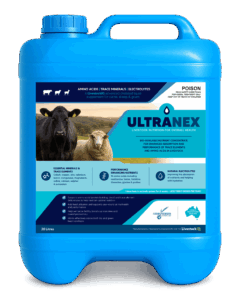
For herds whose ration already covers phosphorus.
Dosing through the trough means no extra handling. Where the ProDispenser goes is a management decision. Many producers prefer a paddock trough, because cows that come to it are there to drink, while cows passing a trough on the way out of the dairy are often walking back to feed.
FAQ
My cows are on a balanced ration already. Why add amino acids?
A ration is balanced on crude protein, energy and minerals. Supplying preformed amino acids, absorbed through the small intestine, adds the building blocks for milk protein directly, alongside the ration rather than in place of it.
Will it change my milk test?
Every herd is different. LivestockIQ helps support milk yield and quality as part of the whole diet, and your milk records are the best way to track it.
Is there a withholding period on milk?
No. All LivestockIQ products have a nil withholding period for both meat and milk, and no export slaughter interval (ESI).
Sources
[1] Merck Veterinary Manual, Nutritional Requirements of Dairy Cattle.
[2] Dairy Australia, Early Lactation.
[3] Dairy Australia, Body Condition Scoring Handbook.
[4] Merck Veterinary Manual, Ketosis in Cattle.
[5] Dairy Australia, Transition Cow Management: Technical Review.
[6] Dairy Australia, Fine-Tuning Protein Supplements for Fresh Period Grazing Cows.
[7] Dairy Australia, Nutritional Issues.
Ready to set up your herd's program?
Work out your herd’s program with the DoseIQ Calculator, or find your nearest stockist.
Questions? Call (08) 8725 4668 or email [email protected]