

Dry season nutrition
By the end of the dry, pasture can carry as little as 1 to 3% protein.
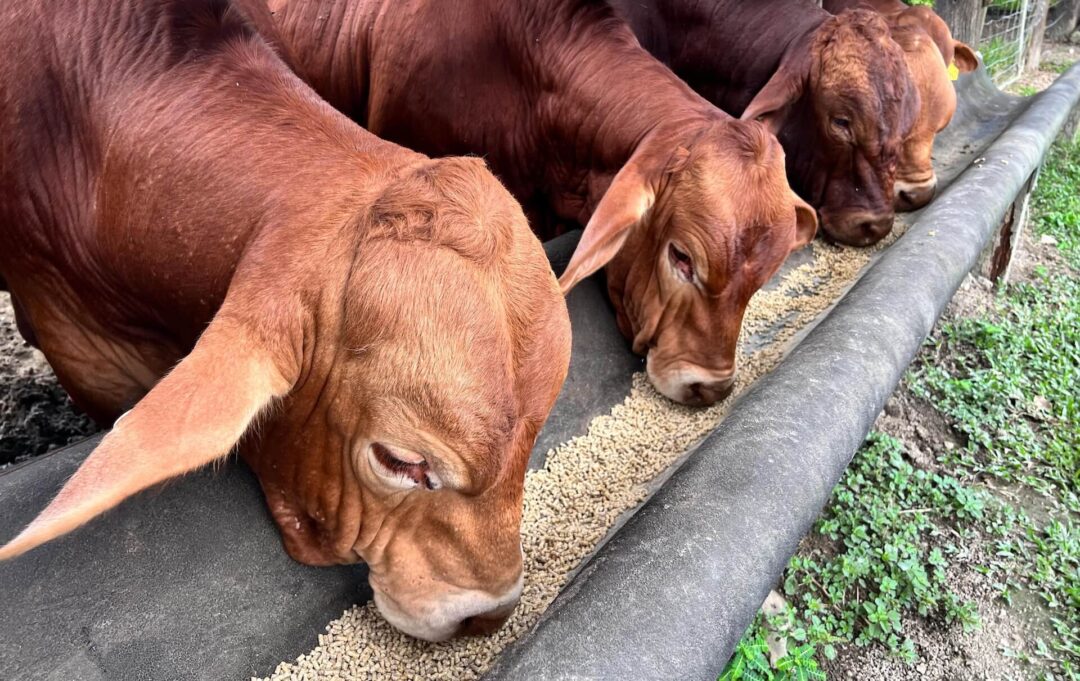
As the dry sets in, pasture protein drops below what cattle need to hold weight. Rumen microbes slow down, cattle eat less, and breeders lose condition just when many are pregnant or still feeding calves. Managing the dry is about slowing that slide.
What’s going on
Cattle need around 7% crude protein in their diet just to maintain. By the end of the dry, northern pasture can be down to 1 to 3%, and dry season pasture often supplies only around 40% of what young stock need.[1]
When protein falls, rumen microbes can’t break down the dry grass, so cattle eat less of it. Urea and other non-protein nitrogen supplements feed those microbes and can lift dry feed intake by 20 to 30%. Mostly they slow weight loss rather than add weight, and they supply no energy.[1]
What to watch for
- Cattle losing condition steadily through the dry
- Breeders that will be late pregnant or lactating at the end of the dry
- Uneven intake of licks, with some cattle eating too much and others too little
- Urea poisoning risk when cattle start on a lick, come off it for more than 2 to 3 days, or drink water that has collected in lick troughs[2]
- Cattle walking long distances between water and feed
Nutrition at this stage
- Protein: the first limit. Typical urea intakes are around 30 g a day for dry and growing cattle and 50 g for breeders, introduced gradually.[1]
- Energy: urea doesn’t supply any, so cattle still need enough dry feed in front of them.
- Phosphorus: breeders need it in late pregnancy and lactation, even in the dry.
- Preformed amino acids: what the animal itself builds muscle, milk and calves from, rather than what the microbes need.
- Trace elements: still depend on the soil.
Urea feeds the microbes. We feed the animal. A dry season lick and a LivestockIQ program do different jobs. Early in the dry, MEGANEX can carry cattle on its own. Later in the dry or in an extended dry, they work best together.
Where LivestockIQ fits
Year-round is best. Keep breeders and growing cattle on a 6-weekly program through the dry so trace elements and amino acids stay steady while pasture quality falls.
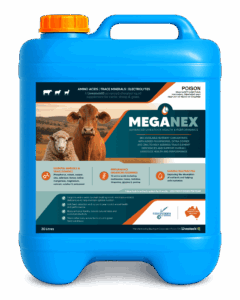
For breeders, growers and dry cattle through the dry. Early in the dry or through a short dry, it can be used on its own. Later in the dry or in an extended dry, use it alongside your protein lick. Producers commonly notice cattle on MEGANEX use less lick or block.
Don’t mix LivestockIQ with urea in the water supply. Use the trough for LivestockIQ and a separate lick for urea.
FAQ
Can I put urea and LivestockIQ in the same trough?
No. Keep urea out of the water supply when you’re dosing LivestockIQ, and follow your lick supplier’s instructions.
Ready to set up your herd's program?
Plan your dry season program with your stockist, or call head office on (08) 8725 4668.
Questions? Call (08) 8725 4668 or email [email protected]
Running cattle in the south instead? See Southern systems