

Calving and early lactation
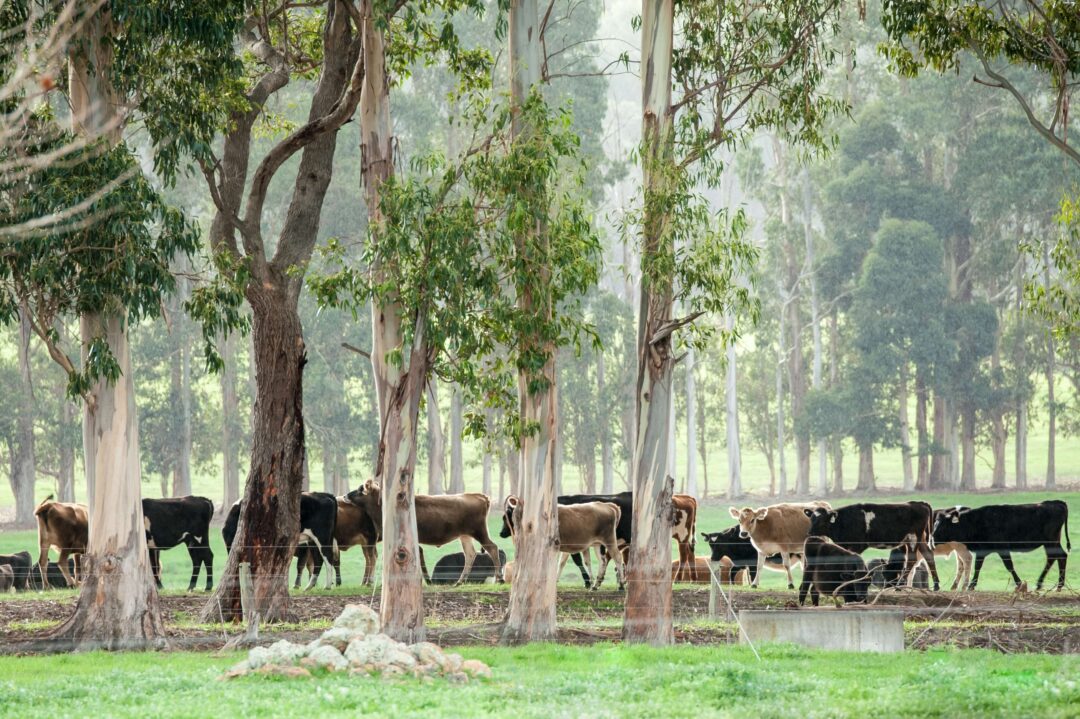
A cow with a calf at foot needs at least twice the energy she did before calving.
Once the calf is on the ground, the cow is feeding it, recovering and trying to get back in calf, all at once. She needs at least twice the energy she did before calving. What she gets now drives calf growth to weaning and her chances of calving again in 12 months.[1]
What’s going on
Milk demand climbs quickly after calving, and peak lactation demand starts around 6 weeks in. A 500 kg cow with a calf at foot can need around 110 MJ of energy a day. If the paddock can’t supply it, she milks off her back and loses condition.[2,3]
That slows the calf’s growth and delays her return to cycling. First-calf heifers have it hardest, because they’re still growing as well.
What to watch for
- Cows dropping condition quickly in the first two months
- First-calf heifers falling behind the mature cows
- Calves that look hollow or are always trying to suck
- Cows wobbly, twitching or down on lush feed or after a cold snap (call your vet)
- Cows not cycling by the time the bulls go in
Nutrition at this stage
- Energy and protein: the base of milk yield, and of her return to cycling.
- Amino acids such as lysine and methionine: building blocks of milk protein.
- Magnesium and calcium: leave the cow in her milk every day.
- Copper, zinc and selenium: support the calf’s growth and immune function, and the cow’s fertility.
- Water: lactating cows drink around 30% more than dry cows.[4]
Green and growing isn’t the same as balanced. Spring calving onto lush pasture looks perfect. But lush feed is high in water and potassium, and trace elements still depend on the soil. The cow can lose condition quietly while she looks well.
Where LivestockIQ fits
Year-round is best. Dosing every 6 weeks all year keeps the cow steady from calving through joining and weaning. If year-round isn’t possible, early lactation is a window well worth covering.
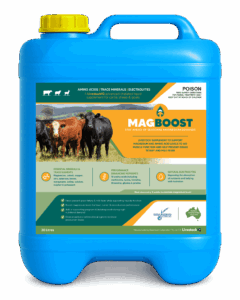
If cows are calving onto lush feed, continue every 3 weeks (25 mL a head) while the risk lasts. It supports the peak magnesium and calcium demand of early lactation and aids in the prevention of grass tetany.
FAQ
Can I run MagBoost and my year-round product together?
No. Never run two LivestockIQ products through the trough at once. Keep cattle on ULTRANEX year-round, switch to MagBoost on its 3-week cycle through the risk window, then go back to ULTRANEX.
Ready to set up your herd's program?
Your local reseller can help you choose the right product and timing.
Questions? Call (08) 8725 4668 or email [email protected]
Running cattle in the north instead? See Northern systems