

Post lambing
Early lactation is the hungriest stage of the year for ewes.
Once the lambs are on the ground, the ewe’s job changes from growing them to feeding them. Milk production peaks a few weeks after lambing, and a ewe rearing twins needs more nutrition now than at any other point in her year. What she gets in these weeks drives lamb growth to marking and weaning, and her own condition for next joining.
What’s going on
Milk yield climbs quickly after lambing, and the ewe’s energy demand peaks around a month in. At that peak, a ewe feeding twins needs around three times the energy of a dry ewe. If the paddock can’t supply it, she milks off her back and loses condition fast.
For the first four to eight weeks, lambs rely mainly on milk while their rumen develops. Ewe nutrition is lamb nutrition. A drop in milk shows up straight away as slower growth and lighter lambs at marking.
Early lactation on lush, fast-growing feed is also a high-risk window for grass tetany and low calcium, especially in older ewes and those feeding twins.
What to watch for
- Ewes dropping condition quickly in the first month
- Lambs that look hollow, hunched, or are always trying to suck
- Mismothering, especially in twin mobs after disturbance
- Ewes wobbly, twitching or down on lush feed or after a cold snap (call your vet)
- Lamb growth falling behind what you expect from the season
Nutrition at this stage
Everything that goes into the milk has to come from the ewe’s feed or her body reserves.
- Energy and protein: the base of milk yield. At peak, a ewe rearing twins needs around three times her dry needs.
- Amino acids such as lysine and methionine: building blocks of milk protein.
- Magnesium and calcium: leave the ewe in her milk every day. Sheep have little usable magnesium reserve, so it has to be topped up daily from the diet.
- Zinc, copper and selenium: passed on to the lambs, supporting growth and immune function while their rumen develops.
- Water: intake can double during lactation.
Green and growing isn’t the same as balanced. Spring lactation on lush pasture looks like perfect conditions, and the ewes often look the part. But lush feed is low in dry matter and fibre, high potassium blocks magnesium, and trace elements still depend on the soil. Lambs on green clover pastures can still be short of selenium or cobalt. The ewe also loses condition quietly while she looks well, and that shows up later at weaning and next joining.
Where LivestockIQ fits
Year-round is best. Dosing every 6 weeks all year keeps the ewe steady from lambing through weaning and into the next joining, so she isn’t rebuilding from a low point. If year-round isn’t possible, lactation is a window well worth covering.
Keep dosing every 6 weeks through lactation. This helps support milk production, colostrum quality and lamb growth, and helps the ewe hold condition. Ewes and lambs share the trough: dose ewes at 10 mL and lambs by weight (2.5 mL under 30 kg, 5 mL over 30 kg).
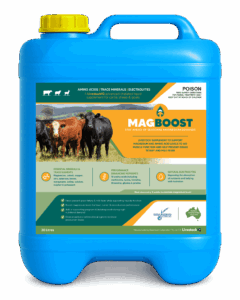
If ewes are lambing onto lush feed, continue MagBoost every 3 weeks (5 mL a head) while the risk lasts. It supports the peak magnesium and calcium demand of early lactation and aids in the prevention of grass tetany. MagBoost contains selenium, so it isn’t suitable for flocks already on a selenium program (bullets, drench or injection). Talk to us about the best option for your flock. Producers commonly report better let-down and stronger lambs.
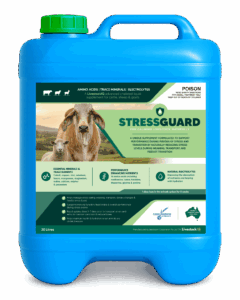
StressGuard at weaning
Use it in place of the regular dose to help support stress and immune function through separation, then return to the year-round program 6 weeks later.
StressGuard contains selenium. If your flock is normally on StockForce because of a selenium program, follow the StressGuard dose rates and instructions exactly, and don’t dose dehydrated animals.
Trough delivery means no yarding of ewes with young lambs at foot.
FAQ
Do young lambs drink enough water to get a dose?
Lambs drink very little water early on and get most of their nutrition through the ewe’s milk. As they start grazing and drinking, they pick up their own share from the trough. That’s why lambs are included in the head count by weight.
Can I run MagBoost and my year-round product together?
No. Never run two LivestockIQ products through the trough at once. Through the risk window, run MagBoost on its 3-week cycle, then go back to the year-round program once the risk eases.
Ready to set up your flock's program?
Your local reseller can help you choose the right product and timing.
Questions? Call (08) 8725 4668 or email [email protected]